
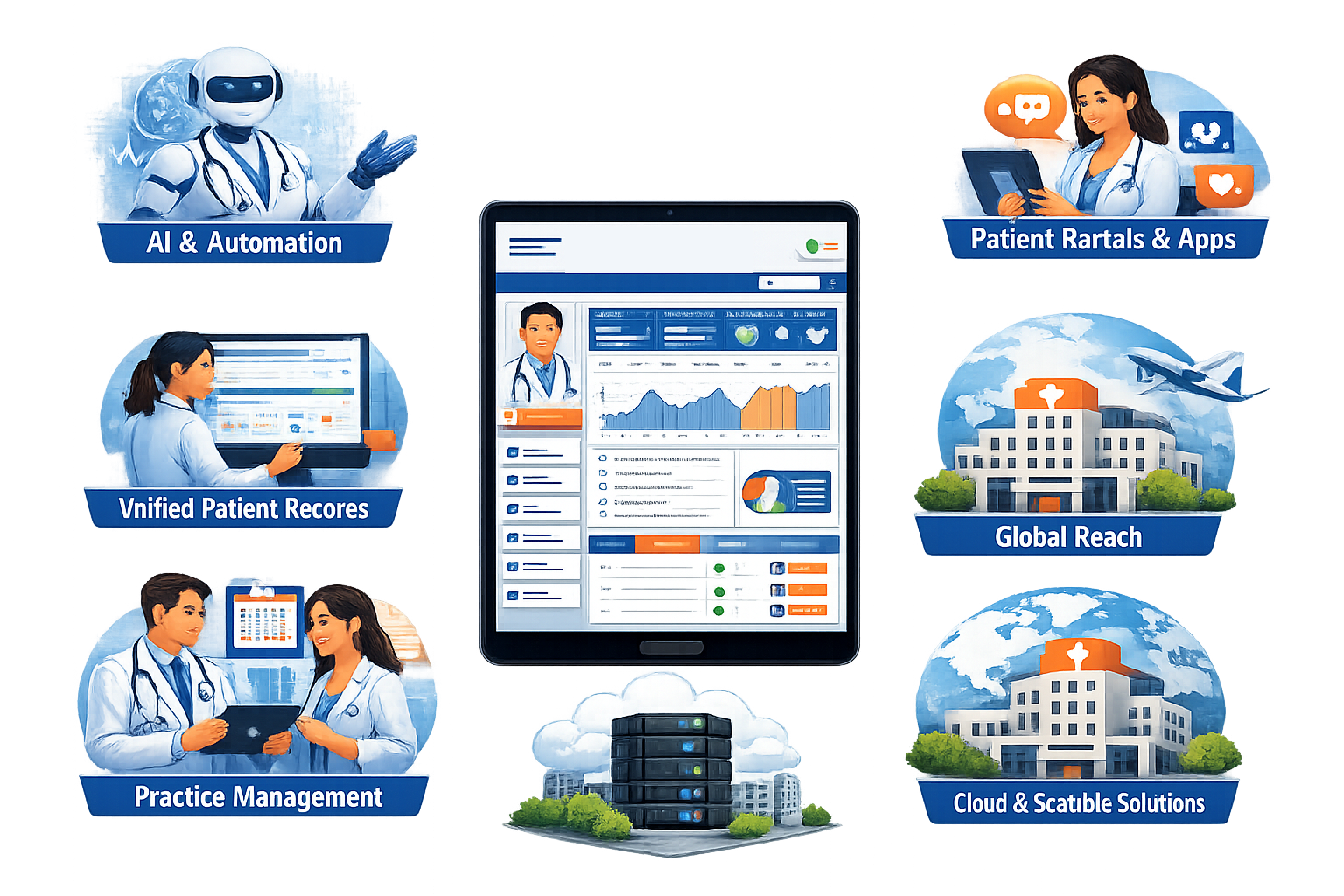
Digital transformation is reshaping healthcare by integrating advanced digital technologies into every aspect of health service delivery, patient management, and hospital administration. According to the World Bank Digital-in-Health Report, healthcare systems worldwide are moving beyond simple digitization toward a "digital-in-health" approach, where technology and data are embedded into healthcare financing, diagnostics, patient care, and health information systems to improve accessibility, efficiency, and affordability. The report highlights that evidence-based digital investments can help governments reduce healthcare costs while improving patient outcomes and care coordination. In this evolving healthcare landscape, Agastha EHR's play a significant role by providing integrated cloud-based Electronic Health Records (EHR), billing, appointment scheduling, telemedicine, laboratory, pharmacy, and patient management solutions. Agastha enables healthcare organizations to streamline workflows, improve interoperability, enhance data security, support real-time clinical decision-making, and deliver patient-centered care through intelligent digital healthcare infrastructure*1.
Digital-in-health represents a strategic approach where digital technologies are not treated as standalone tools, but as an essential part of healthcare infrastructure.
This includes :
- Electronic Health Records (EHRs)
- Hospital Information Systems (HIS)
- Artificial Intelligence (AI)
- Telemedicine
- Laboratory and Pharmacy Systems
- Population Health Analytics
- Interoperability Frameworks
Rather than simply storing patient data, these systems enable healthcare providers to make faster decisions, coordinate across departments, reduce errors, and optimize operational performance.
Agastha provides a comprehensive healthcare management ecosystem designed to support hospitals, clinics, laboratories, pharmacies, and multi-specialty healthcare organizations. Its integrated platform combines clinical and administrative functions into a unified digital environment.
Key Features of Agastha Systems
- Cloud-based Electronic Health Records (EHR) and Hospital Information System (HIS)
- Laboratory Information System (LIS) and Radiology Integration
- Pharmacy Management and Inventory Control
- Online Appointment Scheduling and Queue Management
- Telemedicine and Virtual Consultation Support
- Automated Billing, Invoicing, and Insurance Claim Processing
- Inpatient (IP) and Outpatient (OP) Management
- Real-Time Patient Data Access and Mobile Accessibility
- AI-Enabled Analytics, Dashboards, and Reporting
- Secure Role-Based Access Control and Third-Party Interoperability
These technologies improve healthcare efficiency by reducing manual paperwork, minimizing medical errors, and enabling faster communication between healthcare professionals.
Improved Patient Care
Digital healthcare platforms allow physicians to access complete patient histories instantly, improving
diagnostic accuracy and treatment planning. EHR systems also support coordinated care among specialists,
laboratories, and pharmacies, ensuring better patient outcomes.
Enhanced Operational Efficiency
Practice Management Systems automate administrative tasks such as scheduling, billing, claims management, and documentation. This reduces staff workload and improves hospital productivity.
Data-Driven Decision Making
Healthcare organizations increasingly rely on analytics and artificial intelligence to monitor patient trends, predict risks, and optimize resource allocation. Agastha's reporting and analytics capabilities help administrators make informed operational and clinical decisions.
Telemedicine and Remote Healthcare
Telehealth services have become essential in modern healthcare delivery. Integrated telemedicine platforms allow healthcare providers to conduct virtual consultations, monitor chronic diseases remotely, and improve access to care in rural and underserved areas.
Improved Data Security and Compliance
Healthcare data security is a major concern globally. Modern EHR systems use encrypted cloud infrastructure, authentication controls, and secure data management practices to protect sensitive patient information and comply with healthcare regulations.
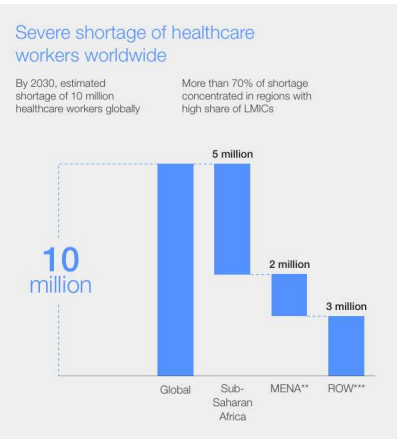
The World Health Organization projects a global shortfall of 10 million health workers by 2030. This workforce shortage, combined with rising chronic disease burdens and increasing patient expectations, makes digital tools essential for sustaining quality care.
Digital solutions help healthcare organizations :
- Reduce clinician administrative burden
- Improve patient throughput
- Expand access through virtual care
- Standardize clinical documentation
- Optimize resource utilization
For hospitals and clinics facing staff shortages and growing patient loads, platforms like Agastha become strategic infrastructure rather than optional software.
The global shortage of healthcare workers is increasing the need for digital transformation in healthcare systems. According to the World Economic Forum, the world may face a shortage of nearly 10 million healthcare workers by 2030, especially in low and middle-income countries. Digital technologies such as Electronic Health Records (EHR), telemedicine, and Practice Management Systems help reduce administrative workload, improve patient data access, and enhance healthcare efficiency. Solutions like Agastha EHR and Practice Management Systems support healthcare providers by streamlining workflows, enabling remote care, and improving patient-centered healthcare delivery.
Academic studies also demonstrate that EHR systems and AI-powered healthcare analytics improve clinical decision-making, predictive diagnosis, and operational efficiency. Research on deep learning in EHR systems shows that healthcare organizations can use patient data for risk prediction, disease detection, and personalized treatment planning. Additionally, studies on telehealth indicate that remote healthcare technologies significantly improve access to healthcare services in rural and underserved regions while reducing treatment delays and operational costs*3.
Challenges and Future Directions in Digital Healthcare
However, research also identifies important barriers to digital transformation, including interoperability issues, cybersecurity concerns, digital literacy gaps, and infrastructure limitations in developing countries. A systematic review on digital transformation in India's healthcare sector found that sustainable digital healthcare implementation depends on strong governance, reliable digital infrastructure, workforce training, and secure health data management systems*4.
The digital-in-health era marks a fundamental shift in how healthcare systems operate. Digital transformation is no longer about replacing paper records-it is about creating intelligent, connected systems that enhance care delivery, reduce costs, and improve patient outcomes.
Agastha's EHR enable hospitals, clinics, laboratories, and pharmacies to embrace this transformation with a secure, scalable, and fully integrated healthcare platform.
By combining EHR, billing, telemedicine, laboratory, pharmacy, analytics, and patient engagement tools in one ecosystem, Agastha helps healthcare providers build the future of connected care.
As healthcare systems worldwide transition toward connected and data-driven care models, digital platforms such as Agastha are becoming essential infrastructure for delivering efficient, scalable, and patient-centered healthcare in the digital era.
- *1 World Bank. (2023). Digital-in-Health: Unlocking the value for everyone. World Bank Report: Digital-In-Health | Center for Global Digital Health Innovation
- *2 World Economic Forum. (2024). Transforming healthcare: Navigating digital health with a value-driven approach. World Economic Forum.WEF_Transforming_Healthcare_2024.pdf
- *3 Chandrakar, M. (2024). Telehealth and digital tools enhancing healthcare access in rural systems. Discover Public Health, 21(1). Springer Nature. Telehealth and digital tools enhancing healthcare access in rural systems | Discover Public Health | Springer Nature Link
- *4 Inampudi, S., Rajkumar, E., Gopi, A., & Sruthi, K. (2024). Barriers to implementation of digital transformation in the Indian health sector: A systematic review. Humanities and Social Sciences Communications, 11, 632. Barriers to implementation of digital transformation in the Indian health sector: a systematic review | Humanities and Social Sciences Communications