
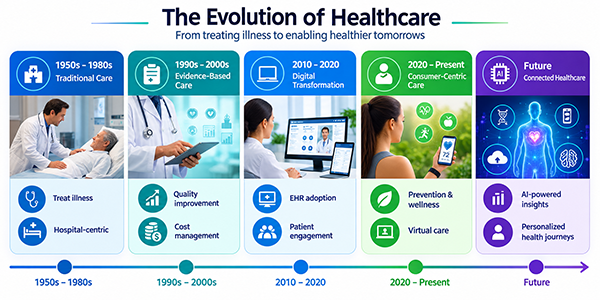
Healthcare has changed significantly over the years. In the past, healthcare mainly focused on treating people when they became sick, and care was mostly provided in hospitals and clinics. Patients had limited access to health information and relied heavily on doctors to make decisions.
Today, healthcare is more focused on keeping people healthy, preventing illness, and providing care that is convenient and personalized. New technologies such as telehealth, mobile health apps, wearable devices, and remote monitoring allow patients to access care from anywhere and stay involved in managing their health. This shift supports a more connected and patient-centred approach to healthcare, where care is coordinated around the needs of individuals rather than just treating diseases. World Health Organization emphasizes this people-centred approach to delivering healthcare.
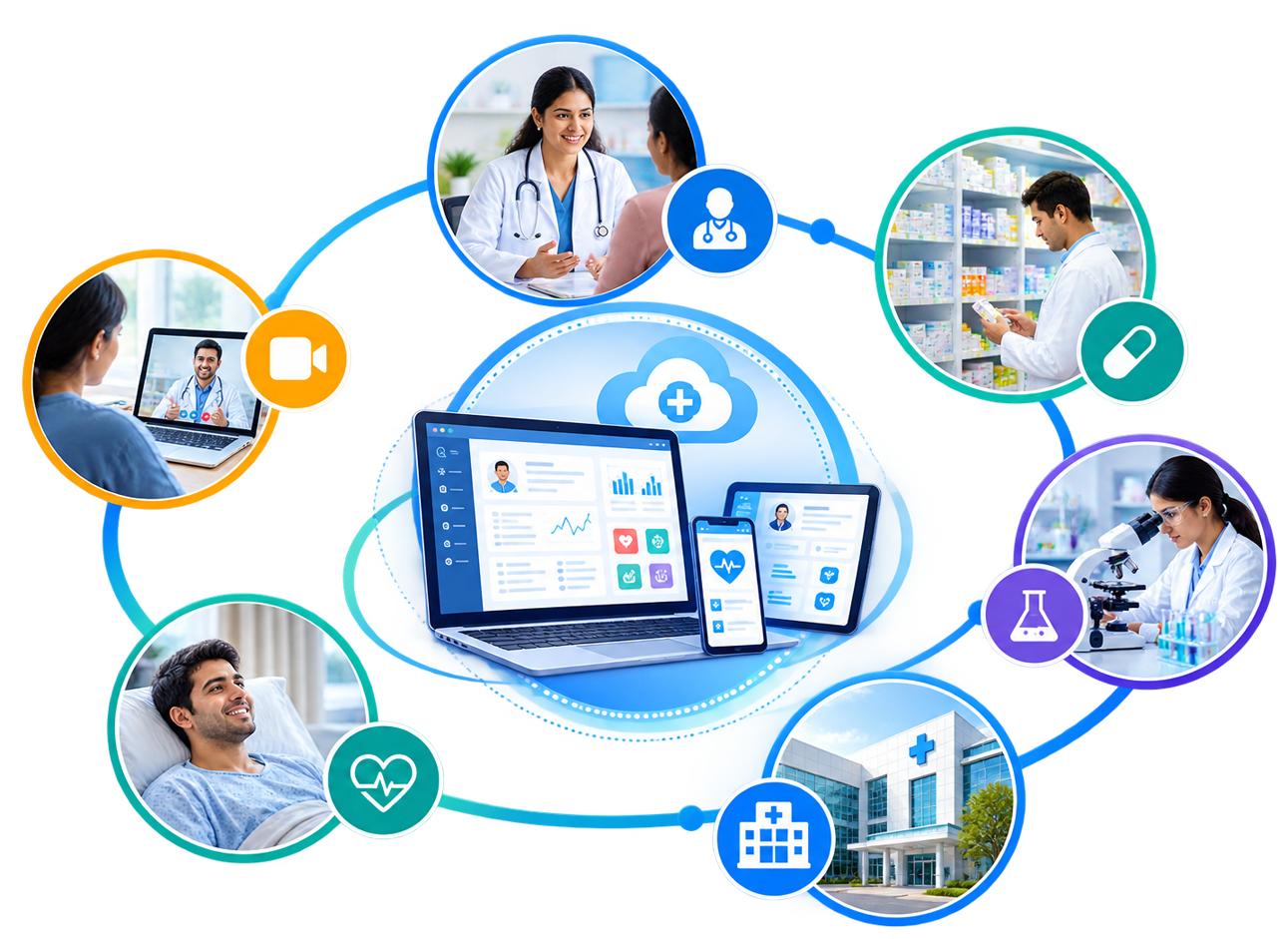
Healthcare delivery is no longer limited to hospitals and clinics. Advances in digital health technologies have created a hybrid care model that allows patients to receive care through multiple channels, including in-person visits, telehealth consultations, home-based monitoring, digital therapeutics, and mobile health applications. This shift enables healthcare to extend beyond traditional clinical settings and supports a more continuous approach to care. Through virtual consultations and connected health platforms, patients can access medical services more conveniently, while clinicians can monitor health conditions remotely and intervene earlier when needed. Interoperability standards such as HL7 FHIR further support the seamless exchange of information across providers, devices, and care settings.
This transformation reflects a broader move toward integrated and patient-centred care. Rather than interacting with the healthcare system only during episodes of illness, patients are now engaged throughout their health journey through wearable devices, digital health applications, remote monitoring solutions, and personalized wellness programs. The hybrid care model improves access for rural and underserved populations, enhances convenience, and encourages greater participation in personal health management. As healthcare organizations continue to embrace interoperability and digital innovation, they are creating a seamless healthcare experience that connects every stage of the patient journey, from awareness and prevention to diagnosis, treatment, recovery, and longterm wellness. Organizations such as Agastha are well-positioned to support this transformation by helping healthcare providers build connected ecosystems that integrate clinical, operational, and patient-generated data into a unified care experience.
"World Health Organization emphasizes the importance of coordinated services across the continuum of care to meet patients' comprehensive needs"
1. Better Care Coordination Across Providers and Settings
When healthcare information is shared seamlessly across hospitals, clinics, laboratories, and specialists, providers gain a more complete view of the patient's health history. This improves care coordination, reduces communication gaps, and ensures patients receive consistent care throughout their healthcare journey.
2. Improved Patient Engagement Through Digital Tools and Portals
Modern healthcare technologies allow patients to access their health information, communicate with providers, schedule appointments, and track their care plans through digital platforms. This increased access empowers patients to become active participants in managing their health and making informed healthcare decisions
3. Reduced Duplication of Tests and Procedures
Disconnected healthcare systems often result in patients undergoing the same tests or procedures multiple times because information is not readily available across providers. Improved interoperability enables secure data sharing, helping clinicians access existing records and reducing unnecessary testing, costs, and delays in treatment
4. Enhanced Access to Care Through Telehealth and Remote Monitoring
Digital health solutions make healthcare accessible beyond traditional clinical settings. Telehealth consultations and remote patient monitoring allow individuals to receive care from home, improving access for rural communities, elderly populations, and patients with mobility challenges while supporting continuous care management
5. More Personalized and Proactive Healthcare Experiences
Digital healthcare platforms make it easier for patients to access their doctors from anywhere, schedule appointments conveniently, connect through virtual consultations, receive e-prescriptions, access medical records, and communicate with their care teams. This connected approach supports timely interventions, improves continuity of care, and empowers patients to take a more active role in managing their health.
The Future of Healthcare Is Connected, Continuous, and Patient-Centred
Healthcare is moving beyond the traditional boundaries of the hospital and beyond the EHR itself.
From booking an appointment and consulting a doctor virtually to accessing medical records, receiving e-prescriptions, monitoring health remotely, and staying connected with care teams, technology is making healthcare more accessible, personalized, and continuous. For healthcare providers, connected systems can provide a more complete view of the patient, support better coordination, and enable more informed and timely care.
Beyond the EHR is the next chapter of healthcare: one connected journey, one comprehensive view of the patient, and care that is available when and where it is needed;
Build a More Connected Healthcare Experience with Agastha
At Agastha, we help healthcare organizations move beyond fragmented systems and build connected digital healthcare experiences. By bringing clinical, operational, and patient-generated data together, Agastha can help providers create more seamless journeys for both patients and care teams. The goal is not simply to digitize healthcare, but to connect every step of the patient journey-from prevention and early intervention to diagnosis, treatment, recovery, and long-term wellness.
- *1World Health Organization. (2016). Framework on integrated, people-centred health services. World Health Organization. WHO - Integrated people-centred care
- *2 World Health Organization. (2025). Global strategy on digital health 2020-2027. World Health Organization.WHO - Global Strategy on Digital Health 2020-2027
- *3 World Health Organization. (2019). WHO guideline: Recommendations on digital interventions for health system strengthening. World Health Organization.WHO - Digital Health Interventions Guideline
- *4World Health Organization. (2022). Consolidated telemedicine implementation guide. World Health Organization. WHO - Consolidated Telemedicine Implementation Guide
- *5World Health Organization, & International Telecommunication Union. (2022). WHO-ITU global standard for accessibility of telehealth services. World Health Organization.WHO - Global Standard for Accessibility of Telehealth Services
- *6Health Level Seven International. (2023). FHIR overview. HL7 International.HL7 FHIR - Official Specification
- *7Office of the National Coordinator for Health Information Technology. (2026). What is health information exchange? U.S. Department of Health and Human Services. ONC - What is Health Information Exchange?
- *8Agency for Healthcare Research and Quality. (n.d.). Electronic patient portals. U.S. Department of Health and Human Services.AHRQ - Electronic Patient Portals
- *9Integrated Care for People. (n.d.). IPCHS: Integrated people-centred health services: Placing people at the heart of health services.IPCHS - Integrated People-Centred Health Services Placing people at the heart of health services